On the road out of Hobart Airport there are two billboards one after the other, both advertising locally made single malt whisky, and both claiming to be “the world’s best.” One ad spruiks Sullivans Cove, the much-lauded distillery founded over 30 years ago, and the other is for Callington Mill in the Tasmanian central highlands, in operation since 2017 and now one of the country’s largest whisky producers. Superlatives aside, one thing is clear: when it comes to whisky, Tasmania means business – now more than ever.
When Sullivans Cove first fired up their stills in 1994, they were just the second-ever modern Australian whisky producer to do so, preceded only by Lark, also in Tasmania. And for nearly two decades, just a handful of other folks crazy enough to give whisky-making a try would join them in what, at the time, seemed like a fool’s errand. These were primarily tiny scale, back-shed operations, selling their wares from plastic trestle tables at the Salamanca markets alongside handicrafts and jars of honey.
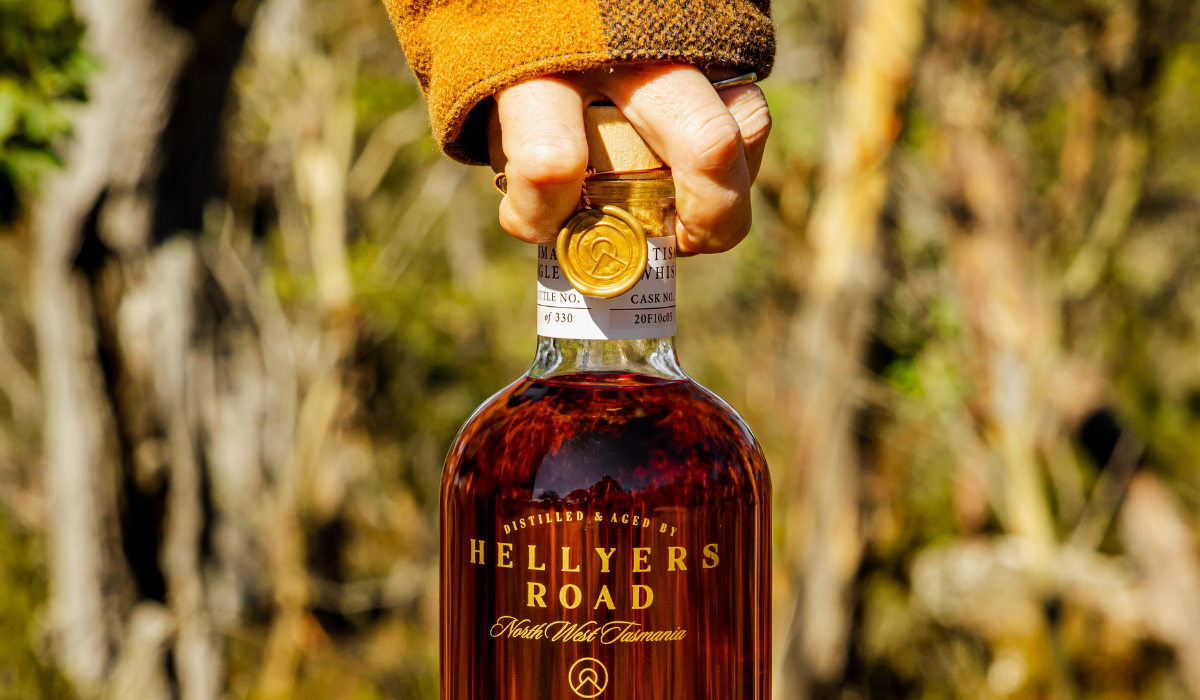
The one exception to that micro-scale was Hellyers Road Distillery, founded in ’97 by a group of dairy farmers near Burnie on Tassie’s north coast. And while larger than its contemporaries, Hellyers was definitely still an act of Tasmanian exceptionalism. Through nothing but high-proof Tasmanian willfulness, these whisky-loving pioneers of the Australian craft spirits movement would muddle along for many years, with most Aussies blissfully unaware that local whisky even existed. Because unlike our homegrown wine and beer industries that take the lion’s share of consumption here, the spirits we drink are still overwhelmingly imported.
But, in 2014, Tasmanian whisky was given a big shot in the arm. This boost came in the form of a major global award for Sullivans Cove, a batch of their French Oak being named ‘World’s Best Single
Malt’ at the World Whiskies Awards, the largest global competition of its kind. Now with two decades of trial and error under their belts, first-generation Tassie producers were starting to bottle some seriously good whisky. Even the newer brands were learning from the older folks to produce great whiskies of their own.
This was all happening at the height of global whisky madness, as rising demand among Gen X drinkers and a growing global middle class, paired with dwindling supply thanks to a slowdown
of production in traditional whisky-making regions during the ’80s and ’90s, sent prices through the roof. Combined with the rise of the internet buzz machine, seemingly insatiable demand for whisky became the norm.
Now, finally recognised on the global stage, Tasmania could get a piece of that pie. Investment dollars flooded in, and new distilleries opened seemingly every week. The same year Sullivans Cove won ‘world’s best,’ Lark, Tasmania’s founding modern whisky brand, went public, offering shares on the ASX as the first Aussie whisky producer to become a publicly traded company.
.ashx)
But the following decade was complicated to say the least. First, there was the scandal involving new distillery Nant, where investors were invited to purchase casks of whisky at a young age which could then be sold back to the distillery at a profit once they reached maturity. It’s a common practice for fledgling producers to earn cashflow in their early years, but the problem was, many of those casks were never filled, or were sold twice, or just didn’t exist. Thus defrauded, a whole cohort of Tassie whisky lovers became understandably gun-shy.
Many who had supported the industry in the early days were also turned off by the ever-increasing prices, especially when new distilleries without an established identity were charging multiples of what you would pay for a decent bottle of Scotch. These new brands also meant more competition, fighting for ever-crowded shelf space in the bars and bottle shops of Australia, who, despite a genuine desire to support local, were still selling imported spirits at a much higher rate.
Even established and trusted brands like Lark suffered under a series of seemingly schizophrenic marketing and production decisions. This was thanks in part to a fast-changing roster of corporate leadership that came to a head when CEO Geoff Bainbridge (of Grill’d fame) resigned in 2022 after a video surfaced of him appearing to smoke ice during an internet sex session. It was a particularly inglorious moment, and a far cry from the genuine skill, camaraderie and good-naturedness of Lark’s founders and dedicated production team.
And then, of course, there was Covid. Lockdowns, plummeting interest rates and stimulus packages were initially a boon for craft whisky producers. Booze lovers were stuck at home, bored, and
with the money they would usually spend on nights out sitting idle. Internet sales went through the roof, as did online tasting events where folks would gladly log on to share the good stuff over Zoom, thus allowing producers to reach new consumers around the country.
.ashx)
But Covid also halted tourism to Tasmania, which was (and still is) a major source of both sales and brand awareness for small craft producers. And we all know what happened post-Covid as the economic chickens of printing unlimited money inevitably came home to roost. With rising interest rates, inflation, and cost of living pressures, it turns out when the mortgage and grocery bills jump by thousands a month, craft Tasmanian whisky drops off the list.
So where does Tasmanian whisky stand in 2026? As economic pressures start to ease, visitors return to the island, and next-gen distillers (as well as the old ones) continue to make more and better products, the light shining amber through the proverbial Tasmanian whisky bottle is starting to look a lot brighter.
The proof of that, first and foremost, is in the whisky.
Back in the ’90s, when fledgling distillers bottled their early, unsteady attempts, the quality of the liquid from the Apple Isle was variable at best. But over the last few years, production methods have seen a significant shift. For a long while, the standard way to mature whisky in Tassie was to use small-format casks, usually ex-fortified wine, and only age them for a short period of time. The conventional wisdom was that a greater surface-area-to-liquid ratio would produce a full-flavoured whisky faster. While this is true, the results can vary wildly – small casks are just more volatile than larger ones. Small casks can also result in unbalanced products, where aggressive oak character overpowers any subtlety from the malt, and can also be a way of masking imperfections in the spirit.
But as the Tasmanian whisky industry has matured, so too has its production methods, and the liquid being bottled. Larger casks and longer maturation times are now the norm among established
Tasmanian distillers, resulting in whisky with better texture, better integration of oak and spirit, and less volatility across the board. In essence, better whisky.
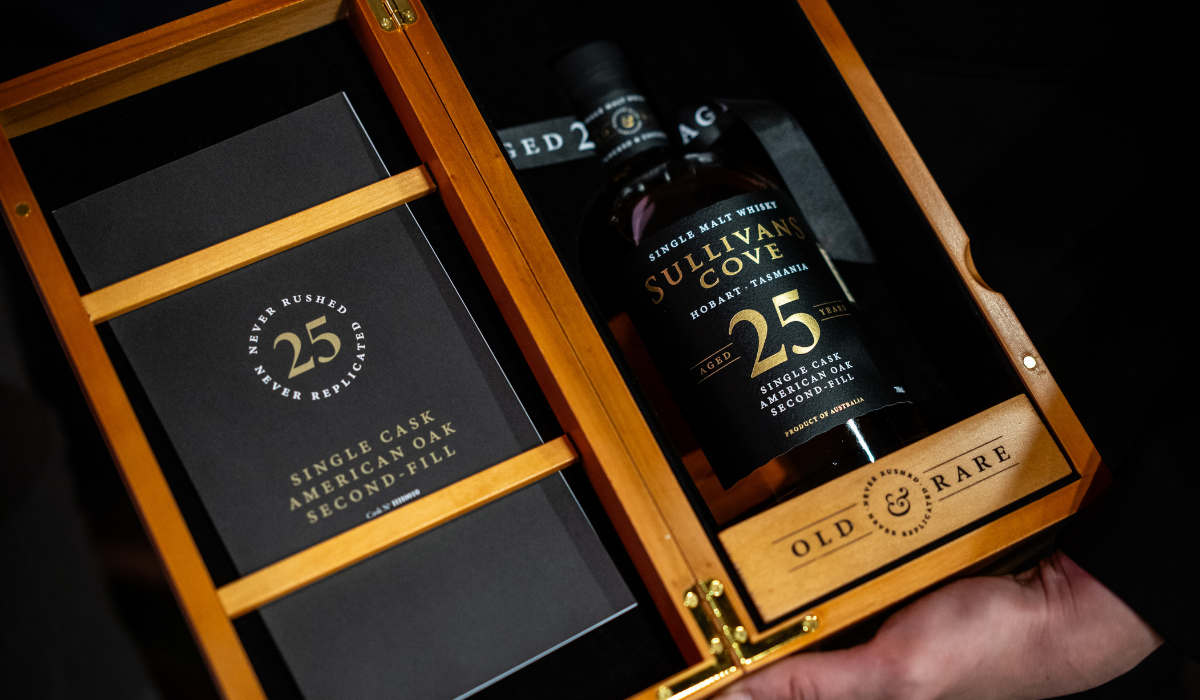
Two distilleries that have always avoided those small casks are Sullivans Cove and Hellyers Road. But the larger casks they employ take time: time for volatility to dissipate, time for the oak to do its work of both filtering and flavouring the spirit, and time for texture to form. So, in the early days of both distilleries, you could be forgiven for thinking their whiskies were rough as guts. But these days, Hellyers Road predominantly bottles whisky at five years or more, with seven, 10 and 12-year versions available at super reasonable prices. Sullivans generally starts at nine or 10 years of age and goes up from there. Both also mainly use American-oak ex-bourbon casks over fortified wine casks, meaning the quality and character of Tasmanian barley is allowed to shine without being overpowered by aggressive oak.
Both distilleries have released 20-year-plus Australian single malts over the last couple of years, an incredible achievement in a region that’s been making whisky for barely 30. A recent 22-year- old single cask of Hellyers Road was one of the best Australian whiskies I’ve ever tasted, and made both myself and Heather Tillott, production manager at Sullivans Cove, shout “peach lollies!” at each other like excited schoolkids. The older Hellyers Road peated editions, such as their 19-year-old, are also pretty bloody special.
I was invited to Hobart for the launch of the Sullivans Cove 25-year-old late last year, to date the oldest Australian whisky ever released, and while the pomp and circumstance surrounding the occasion was impressive, so too was the whisky. It was a privilege to drink this snapshot of an incredibly important time and place in the history of Australian whisky, carefully coaxed to bottling quality by two generations of Sullivans production managers.
The result is as clear a representation of Sullivans Cove’s distillery style as has ever been released. Floral and bright on the nose despite the advanced age, with notes of apple blossom, rose
petal, licorice, unsweetened chocolate, tonka bean and clean clover straw. Toasted grain on the creamy palate offers the cereal sweetness of Weet-Bix and the finish is long and soft. Although perhaps not as textural as certain other bourbon cask releases from Sullivans (like their incredible Apollo Inn collaboration bottling), that lightness is totally appropriate here. After 25 years on oak, this whisky is still very much alive.
.ashx)
Tasmania's warm and dry climate (as compared to Scotland, if not by Aussie standards) means that a 20+ year Aussie whisky is not analogous to a Scotch of the same age. It’s more like a 20-year bourbon produced in the variable climes of Kentucky, of which precious few exist. One of the primary innovations for this ancient Sullivans is that Heather started to dilute the whisky with water while it was still in the cask, slowly lowering the ABV and allowing the whisky to mature further without turning into paint stripper. It’s a trick she learned in France, where brandy often matures for many decades, and is exactly the kind of thinking we need to take Aussie whisky to the next level.
Other outstanding, well-matured whiskies coming out of Tasmania these days include Spring Bay, McHenry and Overeem, the fourth of the original gang from the ’90s who are still going strong. Even some of the much younger, new-school distillers are producing some cracking products. Take, for example, Furneaux Distillery on Flinders Island, a producer we’ve profiled in depth for their delicious and singular whiskies.
Next, let’s talk price – a bit of a bugbear when it comes to Tassie whisky. That bottle of 25-year Sullivans will set you back a hefty $4500. And while that might sound outlandish, if we compare it to a bottle of 23-year-old Pappy Van Winkle bourbon at a minimum of $5500, or a Yamazaki 25-year-old from Japan at $10,000+, the Sullivans, literally the oldest Australian whisky ever released, and made by a brand dwarfed by those American and Japanese behemoths, starts to sound like a bargain. Even 25-year-old Scotch can easily set you back a cool $3k.
And let’s not forget that Sullivans Cove whiskies start at around $250/bottle. It’s still expensive, but that price hasn’t changed in nearly 10 years, while the price of Scotch, Japanese and American whiskies have risen steadily with inflation. Hellyers, too, is super reasonably priced compared to many of its competitors. Their 20-year-plus bottlings are certainly a serious investment (ranging from around $900 to $1400), but again, compared to any other whisky of that age on the market, they’re an absolute steal.
The problem remains, however, that a lot of younger whiskies from less-established producers still sit in the $200+ price band, often for 500ml bottles (standard spirits bottles are 700ml). Even more often, these bottles lack transparency on the age of the whisky or the size of the cask in which it was matured. I worry that these bottles, and the presumption that they create around Tasmanian whisky being “too expensive,” will stifle the growth of the industry.
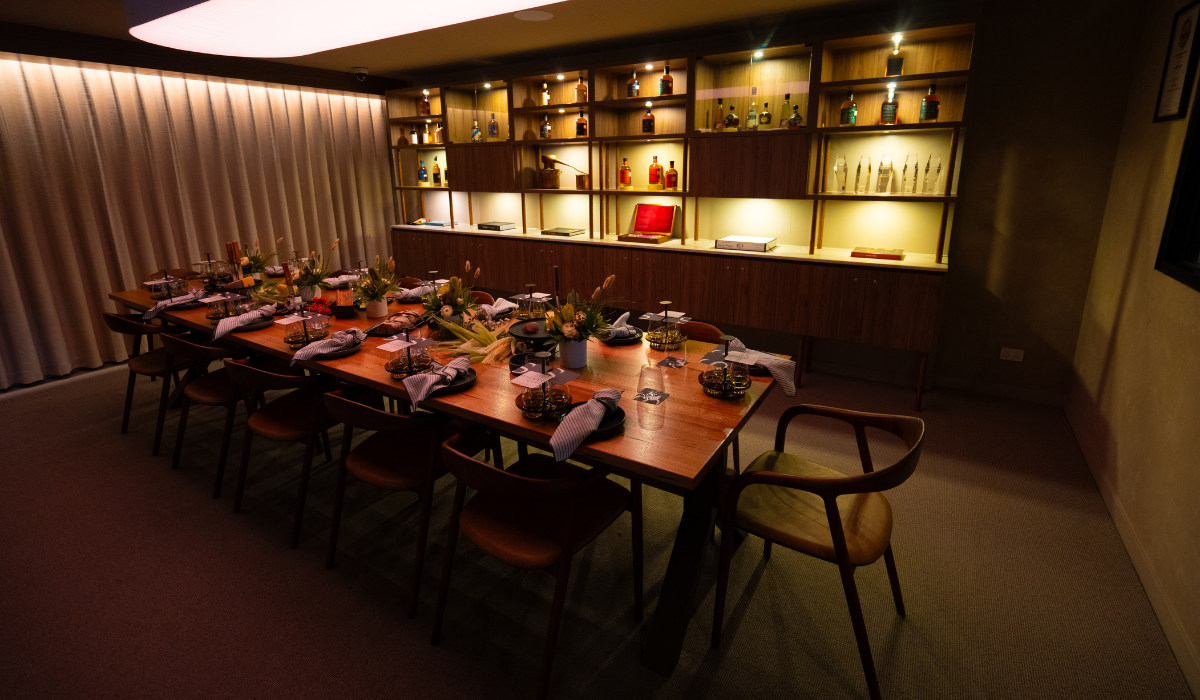
But things seem to be heading in the right direction. Perhaps the best example of that is the world-class whisky tourism currently on offer across the Bass Strait.
Case in point is Lark, who moved their operation to the picturesque Shene Estate in Pontville a few years ago. Here, immersive tours take in historic sandstone buildings with
impressive views of the surrounding countryside. But if you just want to try a few whiskies, there’s also a beautiful Lark bar in downtown Hobart offering tastings, bottle sales, cocktails and excellent hospitality.
Across the Derwent in Cambridge, Sullivans Cove Distillery has undergone a major refit, with upgrades to both production and visitor experience. The public areas of the site now finally look like something appropriate for a luxury brand, with a fit out that feels like the lobby of a boutique hotel. Complete with a private tasting room, a bar stocked with back-catalogue releases, big glass windows looking out over the production floor, and knowledgeable hospitality professionals to guide you, it’s the kind of setup you won’t find among the often less-polished distillery experiences of Scotland.
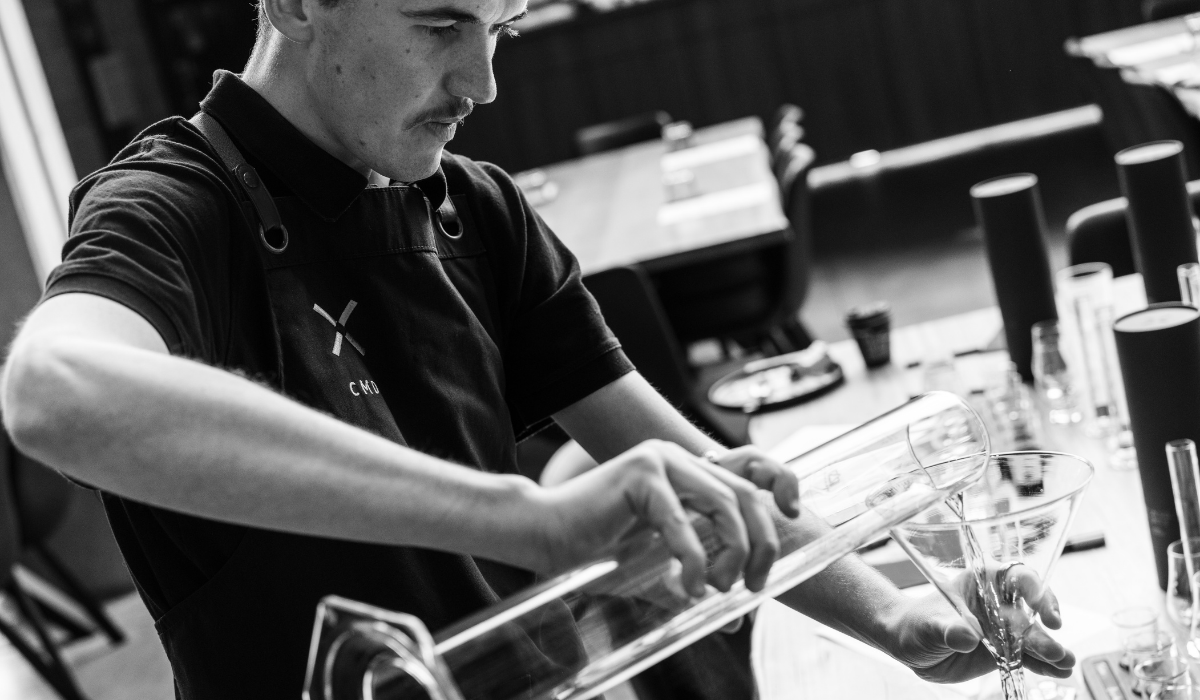
But the folks really taking it to the next level are Callington Mill. As well as a bar overlooking the water in Hobart, they’ve also created a world-class visitor experience at the distillery in Oatlands,
about an hour’s drive north in Tasmania’s central highlands. Here, you can explore the namesake windmill built in 1837, embark on a self-guided tour of the impressive modern distilling facilities, eat at the fantastic bistro, or for a really good time, sign up for the Serendipity Experience where, for $295, you can blend your own bottle of cask-strength single malt by pulling liquid directly from barrels.
On the road back to Hobart after a recent visit to Callington Mill, I caught a glimpse of copper gleaming in the afternoon sun. Driving through the town of Richmond, I saw a large, newly built warehouse, the windows of which displayed two sizable, copper pot whisky stills. The sign out the front said Maguire & Co. Distillery.
Patrick Maguire is a former co-owner and head distiller at Sullivans Cove and is considered one of the founding fathers of the Tasmanian whisky industry. He’s tight-lipped about his new distillery, as the project is still in its infancy, but I commented that the size of those stills visible from the road would suggest a big operation, hopefully able to pump out some volume at a reasonable price.
“Well, we have to,” says Patrick. “If Tasmanian whisky is going to survive, that’s the direction we have to go.”